How Much Allowance for Kids? Wrong First Question
Type "allowance for kids" into a search bar and the suggestions tell you exactly what parents are worried about. How much. By age. Chart. Chores or not. Everyone is hunting for the right number.
Here's the thing the number-hunt misses: a kid who gets $20 a week with no decisions attached learns nothing. A kid who gets $5 a week and has to choose between the candy now and the LEGO set in six weeks is running real financial reps. The amount sets the scale of the lesson. The system decides whether a lesson happens at all.
If you want a rough figure anyway, the most common rule of thumb is fifty cents to a dollar per year of age, per week. So $4 to $8 for an 8 year old, $6 to $12 for a 12 year old. Adjust for your budget and your area, and don't agonize. You can change the number later. The system is the part worth getting right, so let's spend our time there.
The amount sets the scale of the lesson. The system decides whether a lesson happens at all.
There are three honest ways to run allowance for kids. Each one teaches something true. Each one has a real cost. I'm going to give you all three, trade-offs included, so you can pick the one that fits your family instead of the one that won an internet argument.
System 1: Chores-Based Allowance (Money Is Earned)
How it works: Every dollar is tied to work. A chore chart lists jobs and what each pays. No work, no pay. Some families pay per job, others pay a weekly rate for a completed set.
What it teaches: The most fundamental money truth there is: money comes from work. Kids on this system connect effort to income early, and that connection tends to stick. When they hit their first real paycheck, nothing about it surprises them.
The honest cost: You've turned family contribution into a transaction, and your kid will eventually do the math. One day you'll ask them to clear the table and hear "I don't need the money this week." That sentence is the known failure mode of this system, and if you go chores-based you should expect it and decide in advance how you'll answer it.
Best for: Families who want work ethic front and center, and kids who are motivated by earning. If your child lights up at the idea of a job well done and paid, this system meets them where they are.
System 2: The Hybrid (Base Chores Free, Extra Jobs Paid)
How it works: Two tiers. Tier one is family chores: making the bed, clearing dishes, feeding the dog. Unpaid, non-negotiable, done because you live here. Tier two is extra jobs: washing the car, weeding the garden, organizing the garage shelf. Those pay, at posted rates.
What it teaches: Two lessons at once, and they don't contaminate each other. Contribution is what family members do for free. Earning is what happens when you go above the baseline. That's a fairly accurate model of adult life, where nobody pays you to do your own laundry but extra effort at work does get rewarded.
The honest cost: It's the most bookkeeping. You need a clear line between the free tier and the paid tier, and kids are gifted litigators of unclear lines. Expect early negotiation over whether a job counts as "extra." Write the list down. Post it on the fridge. The written chart ends most arguments before they start.
Best for: Most families, honestly. It's the middle path for a reason. If you're stuck choosing, start here.
System 3: No-Strings Allowance (Money Is a Teaching Tool)
How it works: A flat weekly amount, not tied to chores at all. Chores still happen, but they're a separate expectation with separate consequences. The allowance exists purely so the kid has money to practice managing.
What it teaches: Management. Because the money arrives on schedule no matter what, all the learning shifts to what happens after it lands: budgeting, saving toward goals, living with a bad purchase. Think of it as a practice account. Nobody earns a practice account; the point is the practice.
The honest cost: It teaches nothing about where money comes from. A kid can ride this system for years and absorb the idea that money simply shows up. If you choose no-strings, you'll want to build the earning lesson somewhere else: a lemonade stand, a neighborhood pet-sitting job, a summer project.
Best for: Families who already have chores handled through routine and expectation, and who want the allowance laser-focused on decision-making practice.
The Save, Spend, Give Jar Split (Works With All Three)
Whichever system you pick, don't hand over the money as one lump. Split it, every time, across three jars: Save, Spend, and Give.
A split that works for most families: 40% to Save, 50% to Spend, 10% to Give. Save is for bigger goals, the things that take weeks of patience. Spend is theirs, no questions asked, and yes, that includes purchases you think are silly. Give goes to a cause the kid picks: the animal shelter, church, a classmate's fundraiser. The choosing is half the lesson.
Why jars instead of one pile? Because the split teaches allocation, which is the actual skill adults call budgeting. Every week your kid physically divides income across purposes before spending a cent of it. Do that from age 8 to age 18 and it isn't a lesson anymore. It's a reflex.
Physical jars beat apps at this age, by the way. An 8 to 12 year old learns from watching the Save jar fill up. A number on a screen is abstract; a jar of actual dollars is progress you can shake.
Every week your kid divides income across purposes before spending a cent. Ten years of that isn't a lesson. It's a reflex.
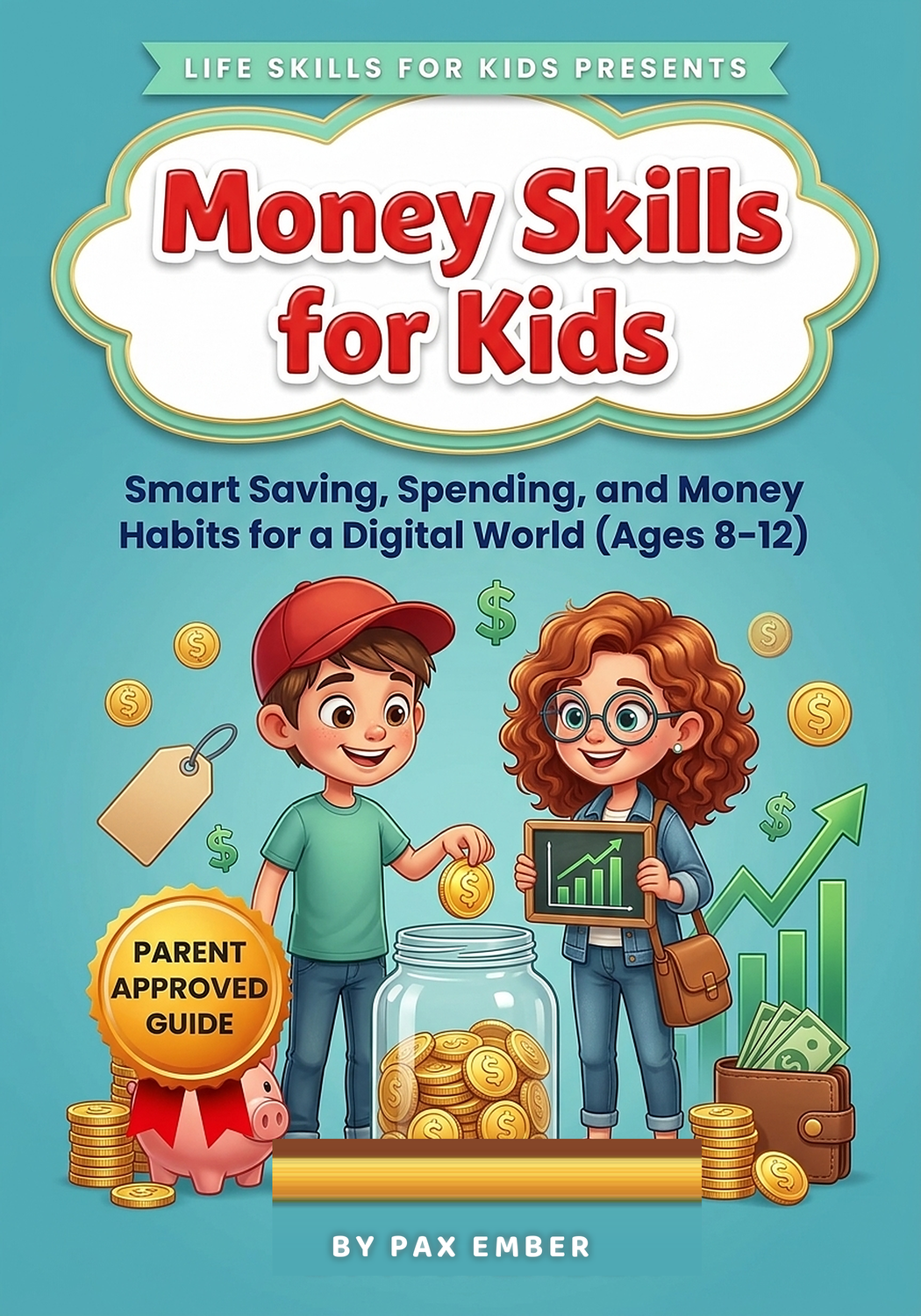
This jar system is the backbone of our book Money Skills for Kids, which turns the split into hands-on missions kids run themselves, with Parent Corner notes so you know what to say at each step. If you want the guided version of everything on this page, that's where it lives.
What to Do When the Spend Jar Runs Dry
This is the moment the whole system exists for, and it's the moment most parents flinch.
Your kid blows the entire Spend jar on day one. On day four, the ice cream truck comes down the street. They look up at you with that face. And every instinct you have says: it's two dollars, just cover it.
Don't. Say the kind, boring sentence instead: "That's a bummer. Your allowance comes Saturday." Then hold it, warmly, without a lecture. No "I told you so." No recap of the purchase that emptied the jar. The empty jar is doing the teaching; your job is just not to interrupt it.
Here's why this matters so much: a $2 lesson about running out of money at age 9 is the cheapest financial education your child will ever get. The same lesson at 29 involves a credit card and a number with a lot more digits. Rescuing your kid from the small consequence doesn't protect them from the lesson. It just reschedules it for a time when the tuition is higher.
And watch what happens the following week. Almost every kid, after one empty-jar week, spends differently. Not because you lectured. Because reality did.
A $2 lesson at age 9 is the cheapest financial education your child will ever get. The same lesson at 29 costs a lot more.
How to Start Allowance for Kids This Week
You don't need a chart from the internet or a family meeting agenda. You need four decisions and twenty minutes.
One: pick your system. Chores-based, hybrid, or no-strings. If you're torn, take the hybrid. You can switch later; kids adapt to a changed system faster than adults expect.
Two: pick your number. Fifty cents to a dollar per year of age, weekly. Round to something you can actually pay in physical cash, because at this age cash beats digital.
Three: set up the three jars. Actual jars, labeled by your kid, in a spot they walk past daily. Agree on the split before the first payment.
Four: pick a payday and never miss it. Same day, every week. An unreliable payday quietly teaches that income is unreliable, which is the one lesson you don't want. Put it in your phone.
Then let the system run for a month before you judge it. The first weeks will be messy. Messy is the point; the mess is where the decisions live. If you want to go deeper on the age side, on what an 8 year old versus a 12 year old is actually ready for, we wrote a companion guide: how to teach kids about money, age by age. And you can browse everything else we make for this age group over at our books page or the blog.
Ready to Set Up the Jars Tonight?
Money Skills for Kids walks kids ages 8 to 12 through the save/spend/give system with hands-on missions they run themselves, plus Parent Corner guides for every step. And the free Money Toolkit gives you printable jar labels and a first-week tracker to start today.
Get the Free Money ToolkitDelivered to your inbox in under a minute. Unsubscribe anytime.
Money Skills for Kids
Part of the Life Skills for Kids series. A hands-on workbook for ages 8 to 12: earning, saving, spending, and giving, taught through missions kids actually want to do, with Parent Corner notes for you. Also on Amazon.
See the Book