What Age Should You Teach Kids About Money?
Younger than most of us started, and probably younger than feels natural. Kids are watching you tap a card and receive groceries years before anyone explains where the money went. By the time a child is 8, the question isn't whether they're learning about money. They are, every day, by watching. The question is whether the lessons are on purpose.
The 8 to 12 window is the sweet spot, and it's the window this guide covers. Old enough to handle real cash and real decisions. Young enough that a bad decision costs five dollars instead of five thousand. Once the teen years arrive, with phones and peer spending and eventually a job, the habits are largely set. This is the decade where you get to set them.
One thing before the age bands: don't treat them as deadlines. A 10 year old who has never handled money starts at the 8 to 9 band, and that's fine. The bands are a sequence, not a schedule. Start where your kid actually is and move at the speed of their competence.
The question isn't whether your kid is learning about money. They are, by watching. The question is whether the lessons are on purpose.
Ages 8 to 9: Jars, Small Earning, and Running Out
At this age, money needs to be physical. Coins and bills, not numbers on a screen. An 8 year old's brain treats a tapped card as magic; a five dollar bill leaving their hand is real in a way no app can match.
What an 8 to 9 year old can own: three jars labeled Save, Spend, and Give, a weekly allowance split across them, and one small way to earn extra (jobs beyond their regular family chores). That's the whole curriculum. They can also own the counting: let them count the split themselves every payday, out loud, even when it's slow.
The lesson that matters most: running out. Somewhere in the first month, the Spend jar will hit empty while something is still wanted. Let it. Don't rescue, don't lecture, just sympathize and wait for payday. At this age the stakes are pocket change and the lesson is permanent. We wrote a whole companion piece on this, and on picking the right allowance structure: the three allowance systems that actually work.
First step this week: three jars, a marker, and your kid doing the labeling. Ownership starts with the handwriting.
Ages 10 to 11: Goals, Comparison Shopping, and Seeing Through Ads
Around 10, a kid becomes able to want something that takes more than a week to get. That changes everything, because now the Save jar can have a name on it.
What a 10 to 11 year old can own: a written savings goal with a picture taped to the jar, the math of "how many weeks until I have enough," and their first comparison shop. Next time they want something, have them find it at three prices: the store shelf, one online listing, and one used option. Same item, three numbers. Watching a $30 want become an $18 purchase is the moment price stops being a fact of nature and becomes a variable.
The new skill for this band: ad awareness. A 10 year old sees thousands of messages engineered to make them want things, and most of those messages don't look like ads anymore. They look like a favorite YouTuber holding a product. Play the spotting game: when you're watching together and something appears, ask "who paid for us to see this?" Make it a puzzle, not a lecture. A kid who can spot the sell is a kid who can decline it, and that skill compounds for the rest of their life.
First step this week: ask what they'd save for if they could have anything under $50. Write it down, tape it to the Save jar, do the weeks-until math together.
Age 12: Bank Account Basics and Bigger Saving
Twelve is the bridge year. The jar system still runs, but it's time for the Save jar to meet the real financial world.
What a 12 year old can own: a first savings account, opened together, in person if you can manage it. Walking into a branch and handing a teller the contents of a Save jar is a rite of passage that an app signup will never be. Show them the balance online afterward so they see both faces of it: the physical deposit and the digital record.
Teach the account in three sentences. The bank keeps your money safe. The bank pays you a little for keeping it there, which is called interest. You can get it back whenever you need it. That's genuinely the whole starter kit; compound growth talk can wait until the first interest payment shows up and does the demonstrating for you.
Bigger saving, bigger horizons: at 12, goals can stretch to months. A bike, a camp fee, a first phone contribution. This is also the age to expand what their money must cover. If they want the upgrade version of anything, the gap between what you'd pay and what they want comes from them. That single policy teaches trade-offs better than any talk.
First step this week: check what your bank offers for youth savings accounts, then put the branch visit on the calendar with your kid watching you do it.
The Two Mistakes That Undo All of It
Whatever band you're in, the same two parental habits quietly cancel the teaching.
The rescue. Covering the gap when they run short, advancing next week's allowance, "just this once" at the checkout. Every rescue teaches the same lesson: consequences are negotiable. Hold the line kindly and let small failures finish.
The lecture. Turning every purchase into a teaching moment. The Spend jar is theirs; if they blow it on a toy that breaks in a day, the broken toy is the teacher, and it doesn't need a co-teacher standing over it saying "see?" Kids learn money the way they learn balance: by wobbling, not by being told about wobbling.
Kids learn money the way they learn balance: by wobbling, not by being told about wobbling.
If you want the whole 8 to 12 sequence turned into something your kid can hold, that's exactly why we built Money Skills for Kids: hands-on missions for earning, saving, spending, and giving, each with a Parent Corner so you know when to step in and when to stay out of the way. It sits alongside the rest of our Life Skills for Kids series, and there's more parent-side thinking on the blog.
Start Your Kid's Money Education This Week
Money Skills for Kids gives ages 8 to 12 the full hands-on version: jar missions, savings goals, smart spending challenges, and giving projects, with Parent Corner guides throughout. The free Money Toolkit gets you started tonight with printable jar labels and a goal tracker.
Get the Free Money ToolkitDelivered to your inbox in under a minute. Unsubscribe anytime.
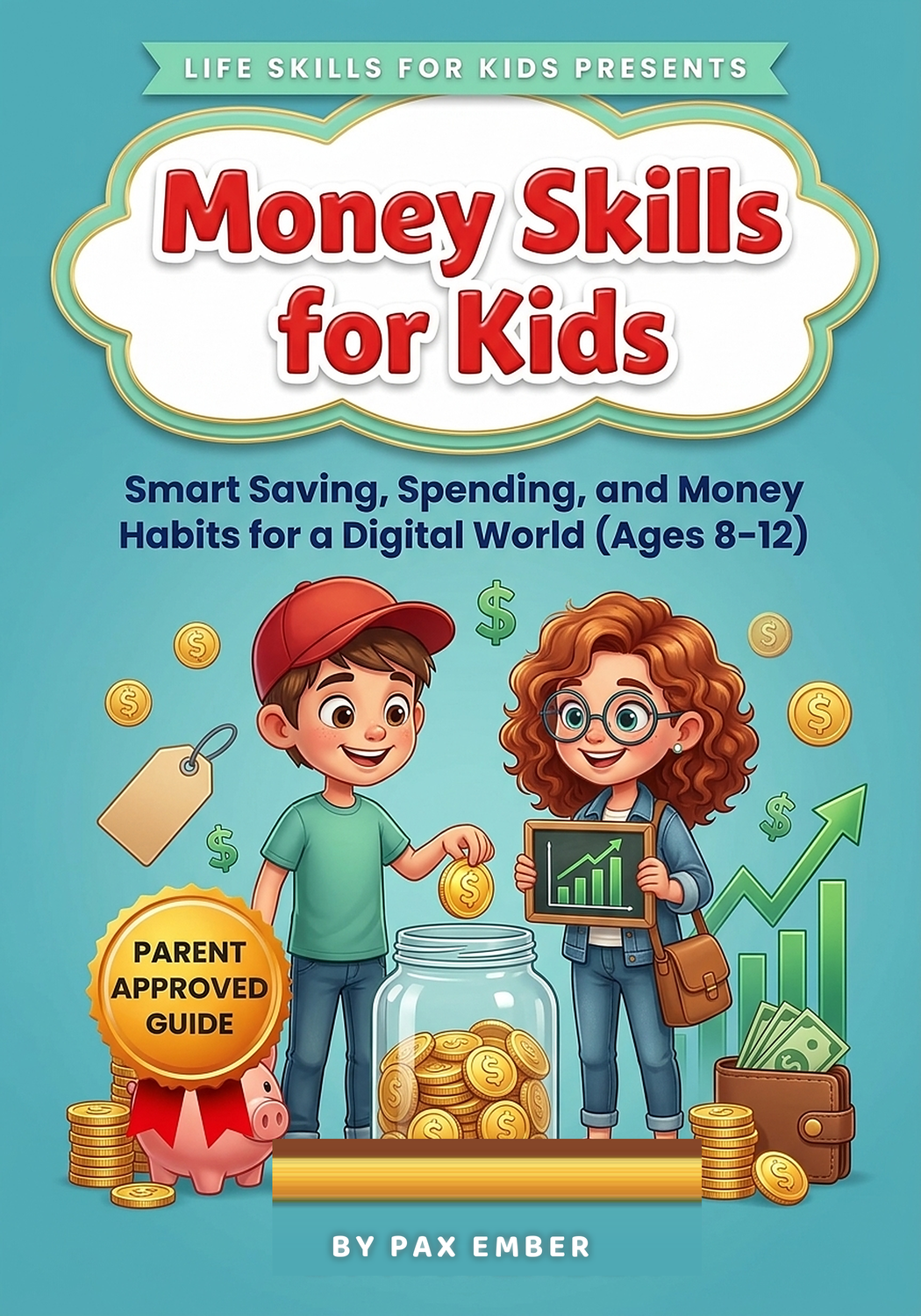
Money Skills for Kids
Part of the Life Skills for Kids series. A hands-on workbook for ages 8 to 12 covering earning, saving, spending, and giving through missions kids run themselves. Also on Amazon.
See the Book