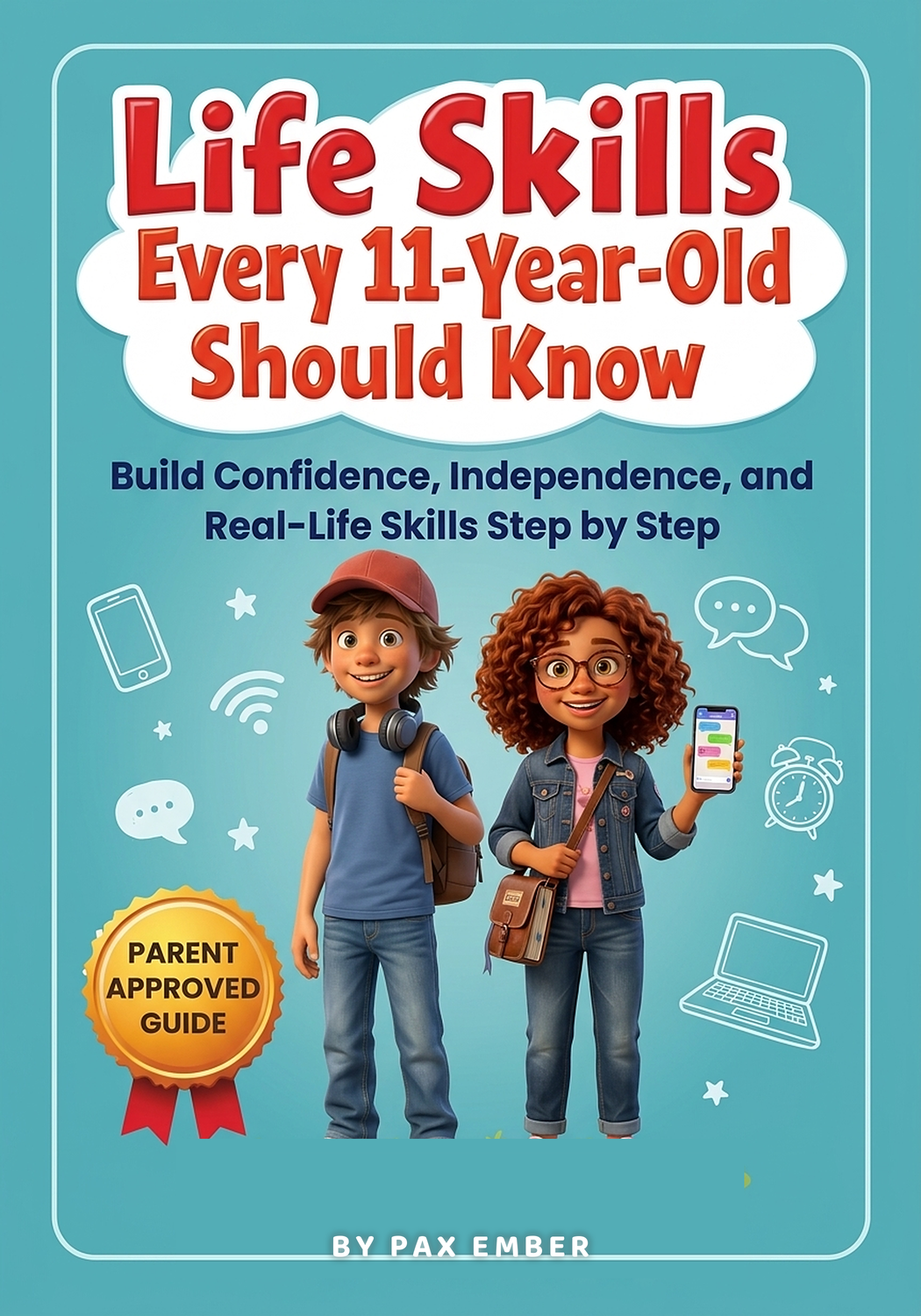
Life Skills Every 11-Year-Old Should Know
The skills that carry a kid toward more independence at eleven. Responsibility, self-management, and autonomy that gets earned in steps a tween can see.
This is the tween tier: no cartoon animals, a cleaner grown-up look, and real talk. Because an eleven-year-old can smell babyish from across the room.
Get it on AmazonEleven wants more rope. Give it well.
Somewhere around eleven, the negotiations start. More say in the schedule. More time without an adult in the room. More "I've got it." The push for independence is not a phase to survive; it is the job description of this age, and it goes far better when the kid has the skills to back the rope they are asking for.
That is what this book is for. It takes the things an eleven-year-old wants, trust, freedom, being taken seriously, and connects them to the things that earn them: responsibility that gets kept, problems handled at the right level, and self-management that does not need a parent as backup memory.
It sits in the tween tier of the Life Skills for Kids series: same hands-on engine as the younger books, redesigned for a reader who has outgrown being handled.
What should an 11-year-old be able to do?
The searches for this age tell the real story: what should an 11-year-old be able to do for themselves, how independent should an 11-year-old be, what life skills should an 11-year-old have. Underneath all three is the same parent question: how much do I hand over, and when?
The book answers by building the capability first, in areas like these:
- Self-management: schoolwork, schedule, and commitments run by the kid, not by reminders
- Responsibility that holds: jobs taken on and kept, including the boring second week
- Problems at the right level: what to handle yourself, what to bring to an adult, and how to tell the difference
- Speaking for yourself: teachers, coaches, and other adults, handled with a straight voice
- Growing autonomy: the freedoms that come next, and the track record that unlocks them
Every chapter ends with a Hands-On Mission with success criteria the tween checks themselves. The trust builds because the evidence builds.
Chores at eleven: from doing tasks to managing them
Chores for 11-year-olds look different from chores for little kids, and not just in size. The real upgrade is who holds the plan. A seven-year-old does what they are told. An eleven-year-old can notice what needs doing, schedule it, do it properly, and own the result, and that is a completely different skill.
The book makes that upgrade explicit. Missions at this tier are things the tween plans and runs: full ownership of their own laundry, simple cooking, a shared space kept genuinely clean, jobs done without being assigned. Earning money off that work fits naturally, and the book connects effort to earnings the way the world eventually will.
Your part stays light on purpose. The Parent Corner in each chapter tells you what this skill looks like at eleven, which line to move next, and how to hand over rope without dropping it.
Built for a tween, not a little kid
- Real talk. Written straight to the eleven-year-old, honest about why any of this matters, never cutesy.
- Cleaner, more grown design. The animal guides from the ages 8 to 10 books are retired here. This looks like a book for someone older, because it is.
- The same engine underneath. Short chapters, one Hands-On Mission with success criteria per chapter, and a Parent Corner that respects both of you.
- Missions with stakes. Tasks the tween plans and owns, so the wins mean something.
If you are hunting for books for 11-year-olds that treat them as capable rather than fragile, that is the exact brief this one was built to.
Questions parents ask
What chores should an 11 year old do?
Adult-shaped chores at kid scale: laundry end to end, simple cooking, shared spaces cleaned properly, and jobs they schedule themselves. The shift at eleven is from doing a task to managing it, and the book builds that shift deliberately.
What should an 11 year old be able to do for themselves?
Manage their own schoolwork and schedule, keep commitments without reminders, handle everyday problems before escalating, and speak for themselves with adults. The book treats each as a practiced skill, not an overnight expectation.
How independent should an 11 year old be?
Independent enough that trust is visibly growing, supported enough that failure is safe. The book builds the machinery underneath, kept responsibility and earned autonomy, and the Parent Corner helps you pick which line to move next.
Why does my 11 year old have an attitude?
Often it is autonomy with nowhere to go. When the want for self-direction outruns the outlets, it leaks out sideways. Real responsibility is a pressure valve, and this book supplies it: decisions that are actually theirs and wins that are earned.
Part of the Life Skills for Kids series
This is the age-11 book, and the first of the tween tier, in the Life Skills for Kids series. Coming up from the age-10 book, the design grows up with the reader. Next comes Life Skills Every 12-Year-Old Should Know, the on-ramp to the teen years.
See every age side by side in the full library.
Get the free companion tools
Grab the free Pax Ember toolkits, plus new-book news and practical tips for raising capable kids.