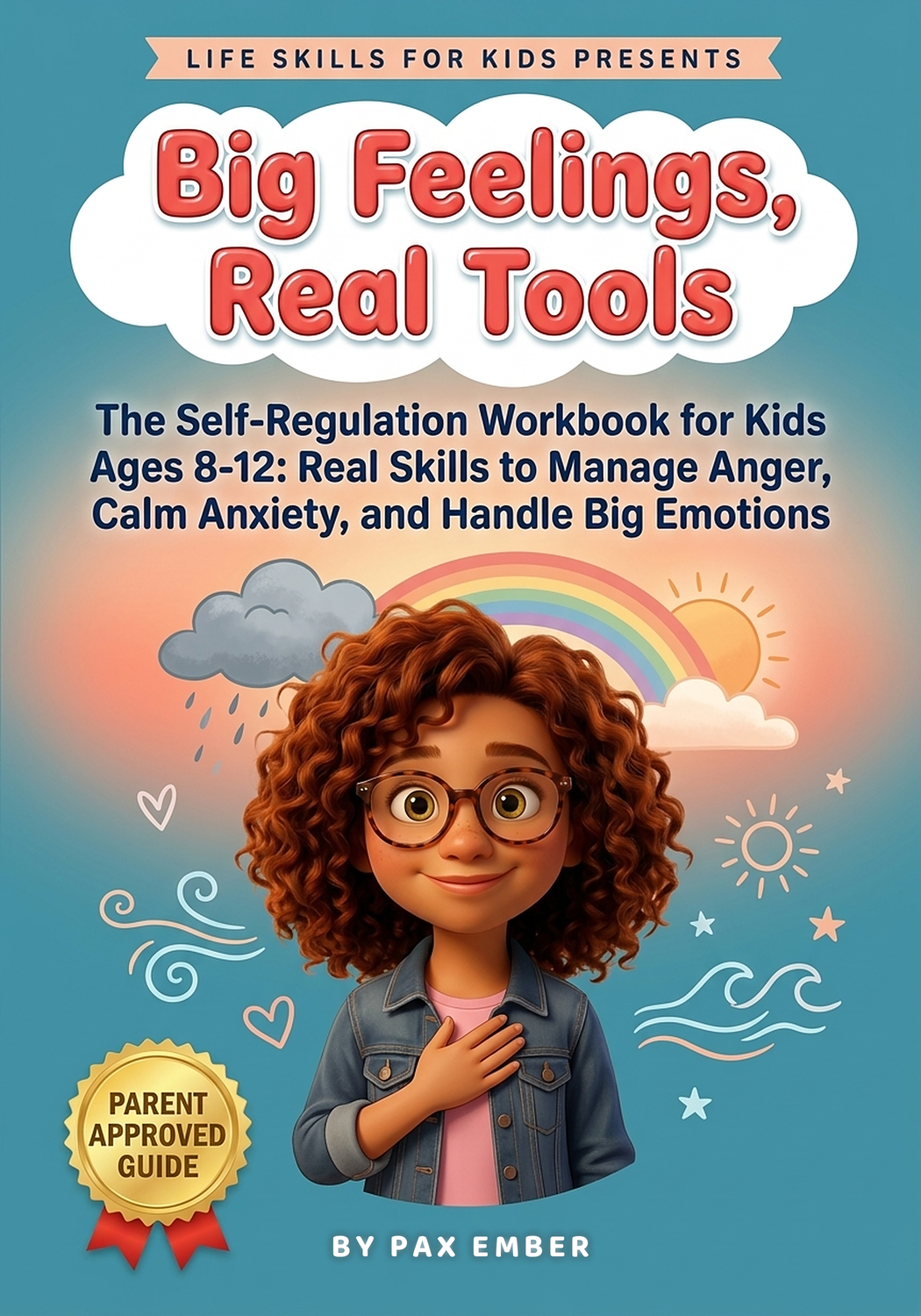
Big Feelings, Real Tools
Real tools for anger, worry, and the big emotions, so feelings stop running the show. A hands-on workbook for kids ages 8 to 12.
Not "calm down." Not "use your words." Actual tools a kid builds, practices, and reaches for on their own.
Get it on AmazonBig emotions aren't the problem. Having no tools is.
Every kid gets flooded: the game lost in front of everyone, the plan that fell through, the worry that circles at bedtime. The feeling isn't the emergency. The emergency is standing in the flood with empty hands, because the only advice anyone ever gave was "calm down."
Big Feelings, Real Tools is the empty-hands fix. Kids ages 8 to 12 learn to spot a feeling early, name it with more precision than "mad" or "fine," and then run a tool that actually fits: a cool-down routine for anger, a sorting move for worry, a reset for disappointment.
The tools work because kids build their own versions and practice them while calm, the same way fire drills happen before the fire.
The anger chapters, because that's why many families are here
If you searched for help with a child's anger, you're in good company; it's the number one big feeling parents ask about. The book takes anger seriously instead of treating it like a defect: anger is information, usually about something that feels unfair or blocked.
Kids learn to catch anger on the way up, when it's still a spark and choices still exist, and they build a personal cool-down routine step by step. Then they practice it calm, so it's actually there during the storm. The Parent Corner covers your half: what helps mid-storm, what pours gas on it, and how to run the repair conversation after.
What's inside
- Naming feelings: a bigger vocabulary than mad-sad-fine, because you can't steer what you can't name
- The early-warning system: reading your own body's signals before the flood arrives
- Anger: what it's for, catching the spark, and building your own cool-down routine
- Worry: sorting what you can control from what you can't, and what to do with each pile
- Disappointment and embarrassment: the recover-and-rejoin move for when things go sideways in public
- The reset: ending a hard day without dragging it into tomorrow
Every chapter follows the series rhythm: the skill, the steps, a Hands-On Mission with success criteria, and a Parent Corner.
Questions parents ask
How do I help my child with big emotions?
Names first, then tools. The book teaches kids to notice early, name accurately, and run a concrete tool that fits the feeling. They keep the tools because they built and practiced their own.
What age is it for?
Ages 8 to 12, with examples from exactly that world: lost games, group projects, test-night worry, and recess unfairness.
Will it help with anger specifically?
Anger gets its own chapters: catching it on the way up, a self-built cool-down routine, and the repair conversation for after.
Is this therapy?
No. It's a skills workbook for regular kids with regular big feelings. It sits comfortably alongside counseling when a family is doing that work, but it doesn't diagnose or treat.
What's my role as the parent?
The Parent Corner: what helps during a storm, what makes it worse, and one question for later when everyone's calm. Ten minutes per chapter.
Part of the Life Skills for Kids series
Big Feelings, Real Tools sits alongside the age-by-age Life Skills books, Social Skills for Boys, Money Skills for Kids, and AI Skills for Kids. Same rhythm in every book: real skills, hands-on missions, and a Parent Corner that keeps you in the loop without putting you in charge.
Want the free companion? The Big Feelings Toolkit has the feelings vocabulary cards and the first cool-down mission, free.
Get the free Big Feelings Toolkit
The feelings vocabulary cards, the early-warning body map, and the first cool-down mission, free.